

Working, Uses & Benefits of Commercial Water Pumps: A Complete Guide
Posted by wilson wilches on
Water is essential for life and the backbone of many industries. It has become essential in every sector of life, from farming to industry and commercial use. Commercial water pumps are essential for moving large volumes of water in diverse applications. Unlike residential pumps, which serve small areas like homes, commercial pumps are designed for heavy-duty use in factories, farms, and large buildings.
Let’s understand commercial water pumps in detail.
Commercial Water Pumps
Commercial water pumps are heavy-duty devices used to move water from one location to another. These pumps are critical in industries where reliable and efficient water distribution is needed. Commercial water pumps are designed with durable materials and powerful motors to withstand high pressure and function effectively in demanding work environments.
Operating Mechanism of Commercial Water Pumps
Commercial water pumps operate on a mechanical principle, typically using an electric motor or engine to drive a pump mechanism. This mechanism creates a pressure that forces water to move through the pipe. Water enters through the inlet pipe, where a rotating impeller inside the pump forces it through the system. The water is then moved to the outlet pipe to the desired location.
Commercial water pumps are powered by electricity, gasoline, or diesel engines. This process can vary depending on the type of pump.
Types of Commercial Water Pumps
Commercial water pumps can be categorized as follows.
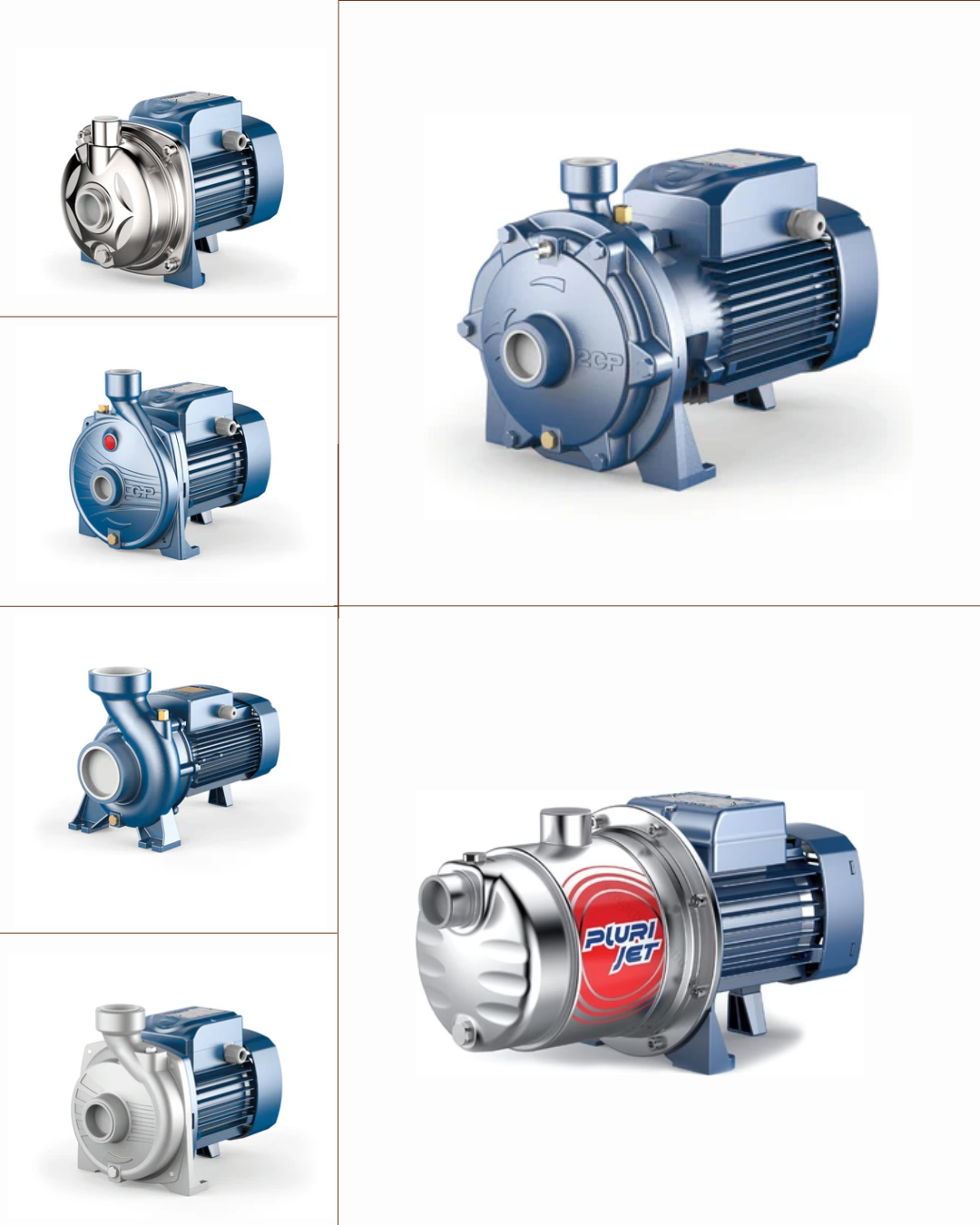
Centrifugal Water Pumps
Centrifugal water pumps are commonly used for moving large volumes of water, especially over long distances or when high flow rates are needed. Centrifugal water pumps work on the principle of centrifugal force. They use a rotating impeller that moves water outward through its spinning action.
Submersible Water Pumps
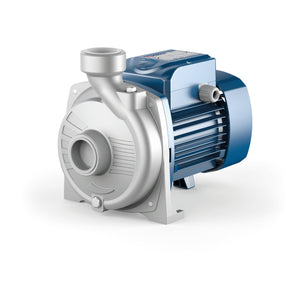
Submersible pumps operate underwater, making them perfect water pumps for wells and other submerged applications. These pumps are fully sealed, preventing water from damaging the motor and other important components. A submersible water pump uses a sealed electric motor to drive an impeller that forces the water upward. When the motor turns the impeller, the water flows through the pump and into the discharge pipe.
Peripheral Booster Pumps
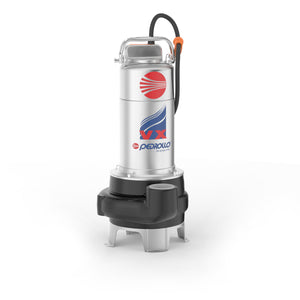
Peripheral Booster Pumps are compact, high-pressure pumps used in both residential and commercial applications. They are mainly used in hotels, hospitals, and high-rise structures where water needs to be supplied to the upper floors. Peripheral pumps use a rotating impeller with multiple small blades that create pressure through a peripheral channel within the pump casing. This design allows it to generate higher pressure compared to standard centrifugal pumps.
Benefits of Commercial Water Pumps
Improved Efficiency
Commercial water pumps can move large volumes of water quickly, making them suitable for a wide range of applications. They ensure the smooth operation of irrigation, drainage, and water supply systems with minimal downtime.
Reliable Water Distribution
Commercial water pumps are known for their reliable performance in heavy-demand areas. They are designed to handle demanding tasks, reducing the need for frequent replacements.
Cost-effective Water Management
Commercial water pumps are generally cost-effective, especially modern models. They can significantly reduce labor costs and improve overall efficiency.
Versatility
Commercial water pumps come in various types: centrifugal, submersible, and diaphragm. These pumps can handle various applications, including cleaning water, wastewater, and handling chemicals.
Main Uses of Commercial Water Pumps
Agriculture
Agriculture depends on water, and commercial water pumps deliver the large volumes needed for irrigation, livestock watering, and farm drainage systems. These pumps are ideal for large-scale farms where manual watering isn’t possible.
Construction
Construction sites also require a large amount of water to be managed, especially during and after heavy rainfall. These pumps are used to dewater foundations and trenches, keeping construction running smoothly.
Sewage and Wastewater Treatment
Commercial water pumps are also used in wastewater treatment plants. They are used in filtration, chemical treatment, and disinfection, maintaining water hygiene and protecting water sources from contamination.
Conclusion
Commercial water pumps are indispensable in modern infrastructure. By understanding their unique functions, we can make informed decisions and invest in the right pump type. If your business relies heavily on water, choosing the right commercial water pumps is non-negotiable. No matter your industry, you can find the right commercial pump for your needs in our collection at Power plus Retailers.